Facebook
 X
 Pinterest
 Copy Link
There’s nothing quite like the excitement of getting an offer on your house. You’re one step closer to moving onto your next phase of life. But what happens if that buyer backs out before closing?
About 10-15% of home sales are cancelled because of a buyer issue. The good news? There are many things you can control to help avoid this.
Issues That Arise (and How to Get Ahead of Them)
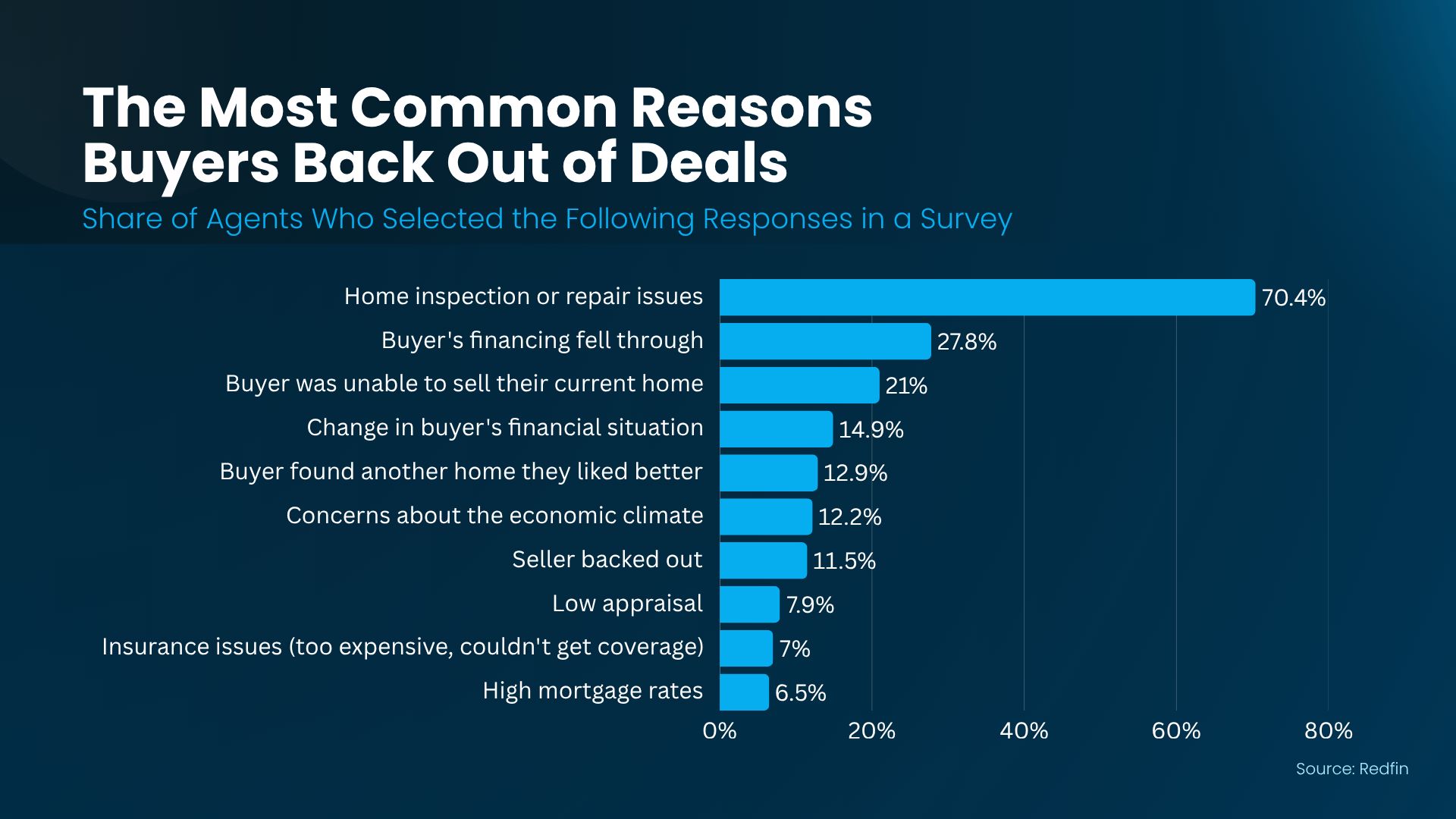
A Redfin survey asked real estate agents why some buyers are backing out. And their answers give you a short of cheat sheet into what could go sideways and how you can get ahead of those headaches.
1. Inspection or repair issues (70.4%)
This is the big one. And the good news? It’s also where you can be the most proactive.
One simple way is getting a pre-listing inspection before your house goes on the market. That way, if something needs attention, you can decide whether to fix it up front (before you sell), adjust your price, or disclose it and come in prepared for what likely would come up in negotiations. It’s a lot better to identify this before a buyer does.
2. Buyer financing falls through (27.8%)
Even buyers who are pre-approved can run into financing issues before closing. And with mortgage rates putting extra pressure on affordability, some buyers are finding it harder to make the numbers work.
While you can’t control whether a buyer’s loan goes through, you can work with your agent to look at their financing before accepting an offer. And if affordability is a concern, your agent can help you explore whether incentives like closing cost credits or a mortgage-rate buydown could make a difference.
3. The buyer can’t sell their current home (21%)
Sometimes, your buyer needs to sell their house before they can buy yours. And if their sale falls through, yours could be affected too.
That’s why it’s important to understand any home-sale contingencies before accepting an offer. Your agent can help you look at where the buyer is in their own selling process and what protections you may want.
The goal isn’t to eliminate every possible risk. It’s to avoid being caught off guard by the ones you can plan for.
Bottom Line
What matters is knowing how to spot potential problems early, how to navigate negotiations, and keep your sale moving forward.
While you can’t control every twist and turn, you can control how prepared you are. Although no sale comes with guarantees, some preparation upfront goes a long way toward making the process smoother. If you’re ready to make a move, let’s talk about what approach makes sense for you.